
Why Make Essential Oil Body Butters A Part Of Your Body Skincare Routine?

Cast a cursory glance at the current skin care offerings and you are bound to spot the universal body butters. They are available in a range of enthralling fragrances and are marketed as the ultimate luxury formulation for your skin. Now, for most of us the term "butter" is enough to invoke images of mamma's loving care and natural, wholesome goodness.
Can Body Butter Be Used on Face?
Body butter as the name implies is to be used on the body and not on the face. I have two separate sources of information for face skincare, i.e. depending on whether you have dry or sensitive skin or oily and combination skin.
So, we assume that if a body butter can do half as much for our skin as the dairy product did for our taste buds, we would have a winner on our hands. In fact, it is this line of reasoning that makes us see right past the high price tags of these products. But, despite the psychological hook and the lofty marketing claims, there are a few questions about body butters that remain unanswered. For instance:
- What exactly is a body butter and how is it different from other skincare products?
- Do body butters really deliver on their promise of offering you smooth, velvety and healthy skin, regardless of the weather?
- And last but not the least, is there a more pocket friendly way to include body butters in your skincare regime?
Continue reading to find the answer to these and other questions that you always had about body butters.
So, What Exactly Is A Body Butter?
The simplest definition is that it is a moisturizing cream for your skin. Again, I re-iterate that it is applied on the body and not on the face. But if it is just another skin cream, why the brouhaha? Yes, there are a lot of skin care products in the market. However, most body lotions and creams would pale when compared to well-made body butters.
The reason for this lies in the recipe of the formulation. Body butter is all emollient, and a mighty rich emollient at that. This means that if used as it should be, body butter can not only protect your skin from the harsh weather but also environmental pollution and natural, transepidermal water loss.
In fact, if you suffer from dry, scaly skin, nothing can offer the excellent and rapid hydration that you can get from body butters. Actually, I would go so far as to say that if you have never tried using body butter, you sure have deprived your skin of a veritable treat. And, this brings us to our next question:
But, How Is A Body Butter Different From Lotions And Creams?
There is a reason they use the term "butter" for this product. Like the real deal, a body butter should comprise of plant lipids and a few other oleophilic (oil loving) ingredients. Notice, how there is absolutely no mention of water based liquids in any form and this is what sets body butters apart from other skin care formulations.
Lotions and creams are no match to body butters!
While lotions are emulsions that can contain as much as 70% water or water like ingredients (read hydrosols), creams are only a few steps behind at 30-40% water content. Typically, artificial emulsifying agents are used to mix the water with the oils/plants lipids. Of course, natural emulsifiers are available in the market, but they are expensive and seldom offer the same degree of emulsion stability as their chemical counterparts.
Also, the inclusion of water based ingredients raises the need for preservatives since anything that contains water will eventually harbor bacterial/fungal culture. So, regardless of the claims that manufacturers make, there simply cannot be such a thing as a 100% natural/organic skin cream or lotion.
Body butters perform when other skin care products fail!
Even if you were to set aside the part about chemical additives, there is still the bit about the impact of body butters on the skin vis-à-vis regular creams and lotions. When the water based ingredients in lotions and creams dry, you are left with less than 50% of the stuff you paid for; plus the evaporating water only makes your skin drier and flakier.
In contrast, body butter is 95-100% plant waxes, oils and butters. This means that lotions and creams will wear off within a few hours but a body butter will continue to provide long lasting hydration and protection. However, here is the caveat. You get all the purported benefits of body butters only if they are made as they should be.
But, this is where most commercial product makers don't come through for you. Randomly pick any body butter and the first ingredient is bound to be water/aqua or a hydrosol or flower water. Call it by any name but it's still water! And, this is what creates the need for making your own body butters. But, before we come to the technique, let's discuss the ingredients.


So, What Goes Into An Effective Body Butter?
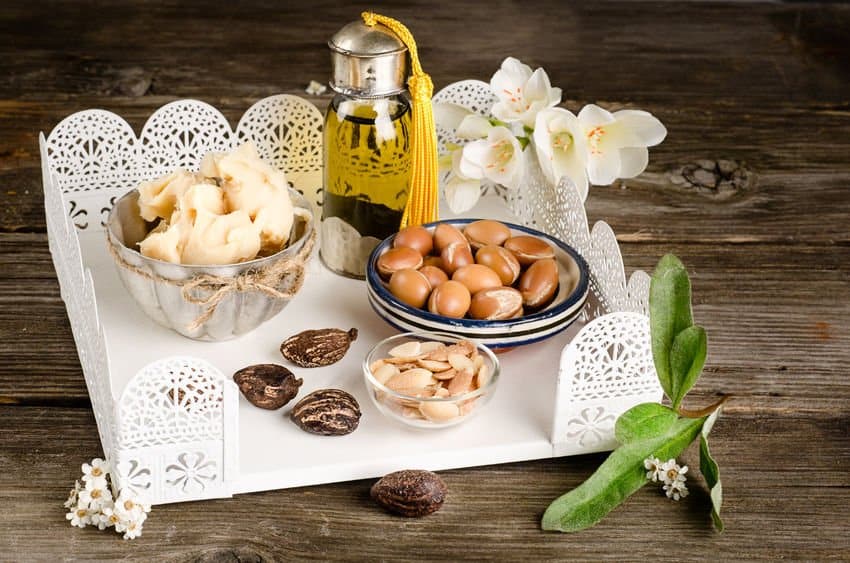
In a nutshell, a body butter comprises of 2-3 primary ingredients and 2-3 secondary ingredients. The primary ingredients are all lipids and plant waxes which form the bulk of the formulation while the secondary ingredients bring additional therapeutic benefits to the table. Within, these two broad categories are a plethora of options.
The primary ingredients: Oils, Plant Butters and Waxes
Oils
These need no explanation. Depending on your pick, you can get a range of skin care benefits from plant oils; from hydration and moisturization to healing and protection against inflammation and free radicals, oils can do this and a lot more.
In fact, if you need a potent vehicle to transfer skin healing nutrients to the deeper dermal layers, no other medium works better than oils. Although you can use just about any plant oil in your body butter, here is a list of a few popular options. Just remember to buy the least processed oils.
1. Evening primrose
The high gamma linoleic content of this oil makes it perfect for inclusion in body butters made for healing chapped and dry skin. The oil is light and gets absorbed easily, which is ideal when whipping up a body butter for summertime.
2. Hemp seed
If you want to transform your skin from dry and flaky to smooth and silky, this is the oil to go for. It has a near perfect ratio of Omega 3, 6, 9 fatty acids plus a bunch of skin healing vitamins and minerals.
3. Rice bran
Use this oil for its skin polishing and brightening effects. Since it eradicates skin sagging and wrinkling, it is a good choice to battle cellulite.
4. Coconut
Virgin, unrefined coconut oil is solid at room temperature, but if you take fractionated oil, it will retain its liquid state even when refrigerated. In either form, the oil is an antimicrobial agent that protects the skin from free radical damage and UV rays. It is a rich source of vitamin E and capric, caprilic and lauric acids all of which are important for skin health.
5. Almond
This medium viscous oil works well when you want a rich body butter that will stop plunging temperatures from taking a toll on your skin. No other oil has comparable content of vitamin E and oleic acid as sweet almond oil, which means that this is one ingredient that can protect and heal the skin in one fell swoop.
6. Argan
Use this luxurious oil if you have truly dry and stubborn skin that does not respond to any other form of treatment. This dense oil works fantastically on skin dryness caused due to ageing and weather conditions as it is a rich source of vitamin E, A and Omega 6 fatty acids.
7. Sea buckthorn berry
Since it contains Omega 7 fatty acids, sea buckthorn oil is an extremely potent anti inflammatory and healing agent. It is also has boat loads of antioxidants, including beta carotene, that neutralize free radicals and stop them from damaging your skin.
If you want to up the therapeutic value of your body butter, you can also include macerated/infused oils in the formula, which bring all the healing powers of the herb/plant into the mix. A few favorites include:
Calendula
This infused oil is prized for its ability to increase the natural healing capacity of the skin.
Carrot Seed
Made by infusing plant oil with regular carrots, this orange colored oil offers significant antioxidant benefits.
Plant butters
The logical question would be, why add plant butters when you already have oils in the recipe? For one, not everybody enjoys the slippery feel created by the application of oil. Also, depending on the viscosity and nutritional profile, oil may not provide the degree of protection and healing power that your skin needs.
Plant butters make up for these shortcomings. They not only improve the texture of the formulation, but also enhance the rate of absorption and add to the overall nutritional value of the preparation. Here is a look at the skin care benefits that you can expect from some popular options.
1. Shea butter
The panacea for all skin issues that comes to you all the way from the Africa, shea butter is a staple in a lot of skin care preparations. This soft, creamy yellow plant butter with a faint nutty aroma has vitamin A, E and F along with essential fatty acids that coat and protect the skin from damaging environmental factors, including UV rays.
2. Mango butter
Full of antioxidants and skin healing vitamins A, C and E, mango butter not only moisturizes the skin but also prevents sagging and wrinkling. The light, astringent butter is perfect for summer.
3. Kokum butter
Another fruity butter, this is a super fast absorbing lipid that hydrates and moisturizes without the oily after feel. The hard, white butter boosts cellular regeneration and prevents the degeneration of skin cells. It also enhances skin elasticity and helps in healing.
4. Cocoa butter
The heavenly aroma of this butter is hard to miss, as is the silky feel that it leaves on your skin. Cocoa butter effectively prevents skin dryness and cracking while bringing a lot of flavanoids and polyphenols into the skin care equation.
5. Sal butter
An extremely stable plant lipid, sal butter is derived from the kernels of the Shorea Robusta tree. It is an effective emollient that can be used to hydrate and moisturize dry, chapped and rough skin. It is practically odorless, spreads easily and is dense enough to impart a wonderful, creamy texture to the formulation.
6. Illipe butter
This hard butter is extracted from trees found in the South Pacific. It offers intense moisturization with its high levels of tocopherols and phytoesterol. It improves the health of the dermal lipid barrier and helps in preventing loss of moisture.
Waxes
When you want to offer your skin greater protection but would like to keep your butter light, waxes help to improve the coating ability of the formulation. They also improve the glide consistency without increasing oiliness. Some of the waxes to consider include:
1. Jojoba oil
Yes, jojoba oil is actually a plant wax that also happens to offer the benefits of a vegetable oil. It is so like sebum that it gets absorbed easily and quickly and offers the same level of protection that you get from natural skin secretions. Moreover, it is a gentle exfoliant that rids the skin of dead cells and heals and nourishes the healthy dermal layers underneath.
2. Candelilla wax
High in esters, resins and fatty acids, this wax is frequently used in cosmetic preparations. It will make your formulations denser and act as an effective barrier against environmental elements. It is also very potent when used against stretch marks.
3. Tuberose floral wax
While other floral waxes are available, this is a personal favorite thanks to its light yet lingering fragrance and abundance of phospholipids that make the skin velvety smooth.
4. Organic beeswax
Although this option does not sit well with everybody, it is one of the most popular natural waxes. It seals the moisture into the dermal layers and is one of the best choices for very dry and chapped skin.
5. Bayberry wax
It is a rich emollient that hydrates and soothes while acting as a emulsifying and thickening agent in skin care formulae.
The secondary ingredients for body butter
Essential oils
There are a myriad of options available depending on your requirements. For instance, use floral oils such as lavender, jasmine, neroli or rose to make your butter smell amazing. If you want the preparation to combat stretch marks and cellulite, rosemary and clary sage are good choices while sandalwood and turmeric are coveted for their healing and soothing effects.
Powders
Turmeric, rose petal powder, orange peel powder, spirulina will not only give your formulation a delightful pastel hue but will also increase its therapeutic and antioxidant value.
Extracts
Algae and green tea extracts are the top choices here as they offer antioxidant and anti ageing benefits.
Humectants
These compounds make moisture available for the skin cells by drawing it from the formulation and/or the environment. Vegetable glycerin, aloe vera gel and honey are excellent humectants that will leave your skin feeling soft and pampered.
Preservatives
Rosemary oil is both an anti-oxidative and antimicrobial agent, but vitamin E, particularly T-50, is a more potent option. If you are using water based ingredients, using grapefruit seed extract will significantly increase the usable life of the formulation.
What Are The Benefits Of Body Butter?
In terms of preparation, simplicity is the biggest selling point of body butters. You can be as minimalistic or as adventurous as you like with these formulations. Your body butter can be made as a general purpose skin moisturizer or you can tweak the formula to accommodate the specific needs of your skin.
As far as usage goes, it would be hard to find a skin care preparation that is half as versatile as body butter. If it has got anything to do with skin care, rest assured that your body butter will have you covered.
But, foremost is the fact that no other product can protect and moisturize your skin better and for longer than your body butter. Whether you are grappling with chapped and flaking skin that is on the verge of cracking or simply want your skin to feel silky soft, body butter can do this and more. Here is a look at a few innovative ways to use body butter:
- A shaving cream that protects, heals and moisturizes
- A cuticle moisturizer that keeps your nails healthy and hydrated
- A nourishing and effective makeup remover
- A hand and foot cream that will keep signs of skin ageing away
- A lip balm
- A hair conditioner and protector
- A softener for rough areas of the body like the elbows, ankles and knees
- A pre-bath oil/moisturizer
Of course, the bit about body butters being 100% natural formulations only adds to their effectiveness and their list of advantages. Contrary to popular perception, you don't have to reserve your body butters for fall and winter. In fact, these are all weather formulations that will keep your skin smooth and glowing, while keeping wrinkles, sagging and stretch marks away.
How To Make Body Butter?
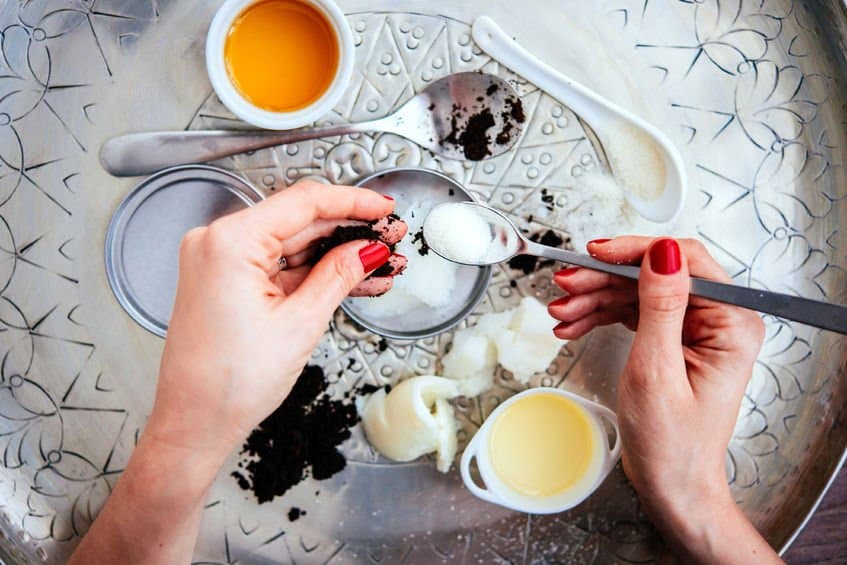
You can use all three primary ingredients or just combine one of the solids (waxes and butters) with the liquids (oils). If you are looking for an old school approach, it is also possible to simply apply a soft butter neat. Of course, mixing it with the other ingredients will increase its therapeutic benefits, but this is a no effort way.
Simple foolproof two ingredient recipe
Combine an astringent butter like that of kokum or mango with a rich, dense oil like almond or argan in equal proportion. If texture does not matter much to you, simply put the ingredients in a bowl and use your hand held blender to whisk them together. Fold in a few drops of lavender or citrus essential oil or a fragrance oil and you have your very own, all purpose body butter.
Mixing jojoba and evening primrose oils in equal quantities will yield similar results, just that in this case you will have more of a body oil than a butter. But, jojoba is a plant wax and does offer a significant degree of protection.
Another way is to mix a light oil like that of sea buckthorn berry with a plant wax to enhance the emollient and shielding effect of the formulation. Try combining sea buckthorn berry oil with rice bran oil and tuberose floral wax in equal amounts. Use your handheld blender on the ingredients and you will have a lightly fragrant, creamy, yellow butter that will work fantastically well as a summer moisturizer.
How To Use Body Butter?
The best time to use your body butter is the first thing after a shower and right before bed. The optimal way is to apply body butter when your skin is still damp after shower. So after a quick toweling session, while your pores are open, massage the butter all over your body (not on your neck or face).
Remember, a little butter goes a long way, so you don't have to be too generous. Give your skin about 10 minutes to soak in the plant lipids before putting on your clothes. When using at night, particularly in winter or when trying to combat extreme skin dryness, cover your body with some clothing after applying the body butter. For instance, put on a pair of socks and gloves if you want your hands and feet to be deeply hydrated and moisturized.
How To Store Homemade Body Butter?
Storage container
Depending on the ingredients used, you can store your homemade body butter in just about any jar or container with a wide mouth. Although it is best to use a glass jar, if you have prepared a small batch, you can use your old cream jars even if they are plastic (only if you are going to use all of it within a few days).
However, if you have used essential oils in the formulation, then you need to mandatorily store the butter in a dark colored, glass container because essential oils degrade fast when exposed to heat and light.
Refrigeration requirement
Most hard butters will remain in their solid state at room temperature and even when it is extraordinarily hot, they will only show slight signs of melting. As opposed to this, a soft butter like coconut oil will turn into an oily liquid when the mercury starts soaring.
If you don't fancy the slick feel of oil, simply refrigerate the body butter and remove only when needed. You can also counter the melting by using a mix of hard and soft butters in the formula.
How Long Does Homemade Body Butter Last?
Typically, body butters last for 6 to 9 months, but you need to consider the time you have left on the ingredient with the shortest usable life. For instance, if you have used evening primrose oil in the recipe, your body butter will only stay good for 6 months and 9 at the most if refrigerated because that is the usable life of evening primrose oil.
On the other hand, if you use highly stable ingredients like jojoba oil and kokum butter, you can get over a year from the formulation. Similarly, if you use natural preservatives like rosemary and vitamin E in the recipe, they will increase the life span of the preparation by 3-4 months, as will refrigeration.
How Often Should I Use Body Butter?
Twice a day is the magic figure, but you can use your body butter as often as you like or every time you feel your skin going dry and stretchy. On parts of the body that remain covered, twice is usually enough because the rich lipid content of the butter offers ample moisturization and protection. However, on parts that are exposed to the elements like hands and feet, you may want to use the butter three or four times as need be.
Voila, that’s it for now! Hopefully, you have found the above article helpful. In my next article, you will get a step-by-step guide and some excellent homemade body butter recipes that you can concoct in your own kitchen.



Hi Olivia,
I hope you are well! Thank you so much for this information. Would you happen to have this information in a PDF?
Thanks in advance for your response.
Kind regards,
Angie
Hi Angie,
Please check your email inbox.
Regards,
Olivia
Question from G:
Do you have any recommendations for keeping the skin on a woman's breasts moisturized and as firm as possible? I've had large breasts (36D) since I was 12, and I'm almost 36 now. I usually use the same moisturizer on them as I do on my face (argan & rosehip oil mixed with lavender, geranium, carrot seed, neroli & frankincense) but I was wondering if there would be anything better for that specific area. I know I'm not the only lady who happens to be big on top that's concerned with this, and there are many other women who don't have such a big bra size that are worried about getting saggy as well. If you could let me know anything (or write an article so the info could be shared with other women) I would really appreciate it. Thanks in advance for this, and for all the other info you've provided as well.
Olivia's Response:
You are already doing a great job with your moisturizer of primarily essential and carrier oils, well done.
In your case and for the body, I would perhaps go with body butters, please refer to the link below. I will have 2 more detailed articles on how to make various body butters with one coming up in the next month or so.
https://essentialoilbenefits.com/why-make-essential-oil-body-butters-a-part-of-your-body-skincare-routine/
Would those articles be of interest to you?
Also, although not strictly for the body/breasts, you could give the Neck Firming Blend a try. It has worked well for me for the décolletage areas.
Click Here To Read About Amoils Neck Firming Oil
Thank you for this informative article. Could you please recommend some brands that sell essential oil body butters or organic body butter? Thanks
Hi Parul,
You can get organic body butters from the link below:
Organic Butter Butters
Regards,
Olivia
Question from JJ:
Hi Olivia and team,
Thanks for your wonderful article on body butters.
I'm a starter experimenting with body butters, essential oils and carrier heading on my way to replace all my skin care chemical regimens with home made receipe without any preservatives. Could you please suggest a remedy for my father's condition. My father aged 68 is a diabetic and bp patient under medication. Almost a year back he developed diabetes foot and underwent a surgery for the same. The wound is fully healed and he is fine now. But the doctors conveyed like the blood circulation to his foot has reduced and he has to walk daily. He has eczema in foot for almost 5 years. On and off he gets itching, as per dermatologist advice apply topical steroid creams. The process is never ending without any relief. Off late I came across a receipe with EO and Shea butter. I prepared and asked him to apply in night and in the morning same EO in coconut oil base. It's almost a month he didn't find any relief. I have given the ingredient used.
Butter Eczema Cream
* ½ cup Shea butter or coconut oil
* 20 drops geranium essential oil
* 30 drops cedarwood essential oil
* 20 drops lavender essential oil
Mix all ingredients in a small jar and apply 1 to 2 times a day. Can be used for your children as well. To this I added aloe Vera oil too. Could you please help me with a better receipe to treat ECZEMA taking into his medical history and age.
It would be a very big favour for me and for my dad to come out of his illness.
Thank you so much.
Olivia's Response:
You are welcome and that's great that you are going for all-natural ingredients. The most effective and simplest blend for eczema would be H-Eczema. Simply apply up to 3 times daily to the affected areas for immediate relief. I sincerely hope that your dad gets better.
Thank you for the informative article. Have you heard of adding borax as a preservative? I made this body butter once that includes borax. I like the idea of adding vitamin e. In your article you don't mention heating to blend the oils and butters and waxes but I assume that would be required, right? Do you think it is ok to store body butters in metal containers?
Hi Diane,
You are welcome. I have heard of Borax, however I personally do not advocate its use as it has been banned by the FDA (as a food additive). Indeed, in my next article I will detail a comprehensive guide to making various body butters. I store all my essential oils and body butters in glass containers.
Regards,
Olivia
Love the complete information that you have a way of putting together! Excellent and useful information explaining the difference in ingredients and how they work and the individual benefits as well. Surprisingly I just received ingredients and essential oils that I ordered and am now looking forward to a much more educated mixing experience. Thank you.
Hi Cheryl,
Thank you so much. I will provide a step-by-step guide as well as the body butter recipes over the next few weeks, stay tuned.
Regards,
Olivia
Found this article to be well-written and informative. Enjoyed reading it, looking forward to making my own! I have only recently got back into using essential oils, and from there progressing towards a chemical-free household. Have made my own laundry washing liquid and apart from saving on costs I am happy that I'm not dumping yet more chemicals into the drains via my clothes. Home made shampoo and conditioner next on the list! Feeling quite Earth Motherish 😄
Hi Lyn,
Thank you so much for the warm feedback. Indeed, a chemical-free environment / stopping pollution is the best solution for our planet.
I am pleased to learn that you are making your own household items.
I will have similar articles covering those coming up later. In the meantime, if you need any help, please drop me a line.
Regards,
Olivia